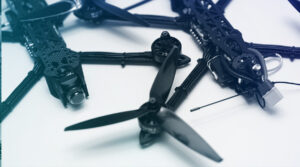
UAV programs often remain operational far longer than the commercial lifecycle of many of the components they depend on. A platform may be expected to remain in production, service, or support for years while individual electronic, communication, navigation, or payload components are discontinued or replaced on much shorter timelines.
For manufacturers, integrators, and organizations supporting deployed systems, managing end-of-life components is therefore not simply a procurement issue. It is an important part of maintaining program continuity and controlling lifecycle risk.
The Lifecycle Mismatch
One of the fundamental challenges in long-lifecycle UAV programs is the difference between system and component lifecycles.
UAV platforms may require continued production, maintenance, upgrades, and field support long after individual suppliers have moved to newer product generations.
This mismatch can create several operational risks:
- reduced component availability
- increasing procurement lead times
- dependence on limited remaining inventory
- unexpected redesign or requalification requirements
- higher costs associated with maintaining legacy configurations
The impact becomes particularly significant when an EOL component is difficult to replace without affecting other parts of the system.
Identifying EOL Risk Before It Becomes a Shortage
Effective obsolescence management begins before inventory disappears.
Procurement and engineering teams can reduce exposure by maintaining visibility into supplier lifecycle notifications, component availability, program requirements, and expected future demand.
Particular attention is often required for components that:
- have limited qualified alternatives
- are supplied by a single source
- require significant integration or qualification effort
- support systems with substantial remaining operational life
- are already showing signs of declining market availability
Early identification gives organizations more time to evaluate sourcing options rather than responding after supply has already become constrained.
Evaluating Remaining Program Demand
When an EOL notification is issued, determining future demand becomes critical.
Organizations need to consider not only planned production but also maintenance requirements, replacement rates, field support, and the expected service life of deployed systems.
Overestimating demand can create expensive excess inventory. Underestimating it can leave a program without sufficient components to meet future requirements.
The objective is therefore not simply to secure as much stock as possible, but to understand the likely exposure throughout the remaining lifecycle of the program.
Extending Access Beyond Current Supply
Even with careful planning, future requirements cannot always be predicted accurately. Programs change, operational lifetimes are extended, and unexpected maintenance requirements emerge.
When standard supply becomes limited, visibility into existing inventory across the broader industry can provide an additional sourcing option.
Components that are no longer required by one manufacturer, distributor, or integrator may still be valuable to another organization supporting an active platform.
This is particularly relevant for EOL and hard-to-find components, where available inventory may exist outside conventional procurement channels even after regular supply has declined.
Balancing Continuity With Inventory Exposure
Securing additional inventory can reduce supply risk, but it also introduces financial and operational considerations.
Organizations must balance continuity requirements against:
- capital tied up in inventory
- storage and inventory management costs
- changing program requirements
- potential redesign decisions
- declining demand over time
A strong EOL strategy therefore considers sourcing and inventory management together rather than treating them as separate activities.
Building Resilience Into Long-Lifecycle Programs
Component obsolescence cannot always be prevented, but its impact can be managed.
Organizations that combine lifecycle monitoring, realistic demand planning, inventory visibility, and flexible sourcing are better positioned to support UAV programs as individual components move through different lifecycle stages.
For long-running platforms, the ability to locate existing inventory when traditional supply becomes constrained can help maintain continuity without making premature changes to otherwise operational systems.
Supporting a UAV program affected by EOL or hard-to-find components?
UAVZone connects industry companies with available UAV and robotics inventory, helping buyers locate components and sellers make unused stock accessible to the market.